Content &
Thought Leadership
Content Strategy & Thought Leadership · intellimation.ai
Content Strategy & Thought Leadership · intellimation.ai
I owned content and thought leadership for intellimation.ai, writing and producing for LinkedIn, the website, product collateral and executive communications. Between March and October 2025 I published 28 posts that generated 22,708 impressions and 2,533 clicks, a click-through rate of 11.2% against a LinkedIn organic benchmark closer to 1 to 2%.
The challenge never changed: take a genuinely complex product, vertical AI for banking operations, and make it land with people who care about margin calls and settlement risk rather than model architecture. That is the same translation problem any technical, regulated or unfamiliar category has, which is why this work transfers well beyond financial services.
Some visuals are editorial recreations created for portfolio presentation. Original client materials have been anonymised or recreated where necessary due to NDA and confidentiality obligations. All project work, deliverables and outcomes reflect genuine professional experience.
A planning and approval workflow built in Notion, so content shipped on a schedule instead of whenever someone remembered.
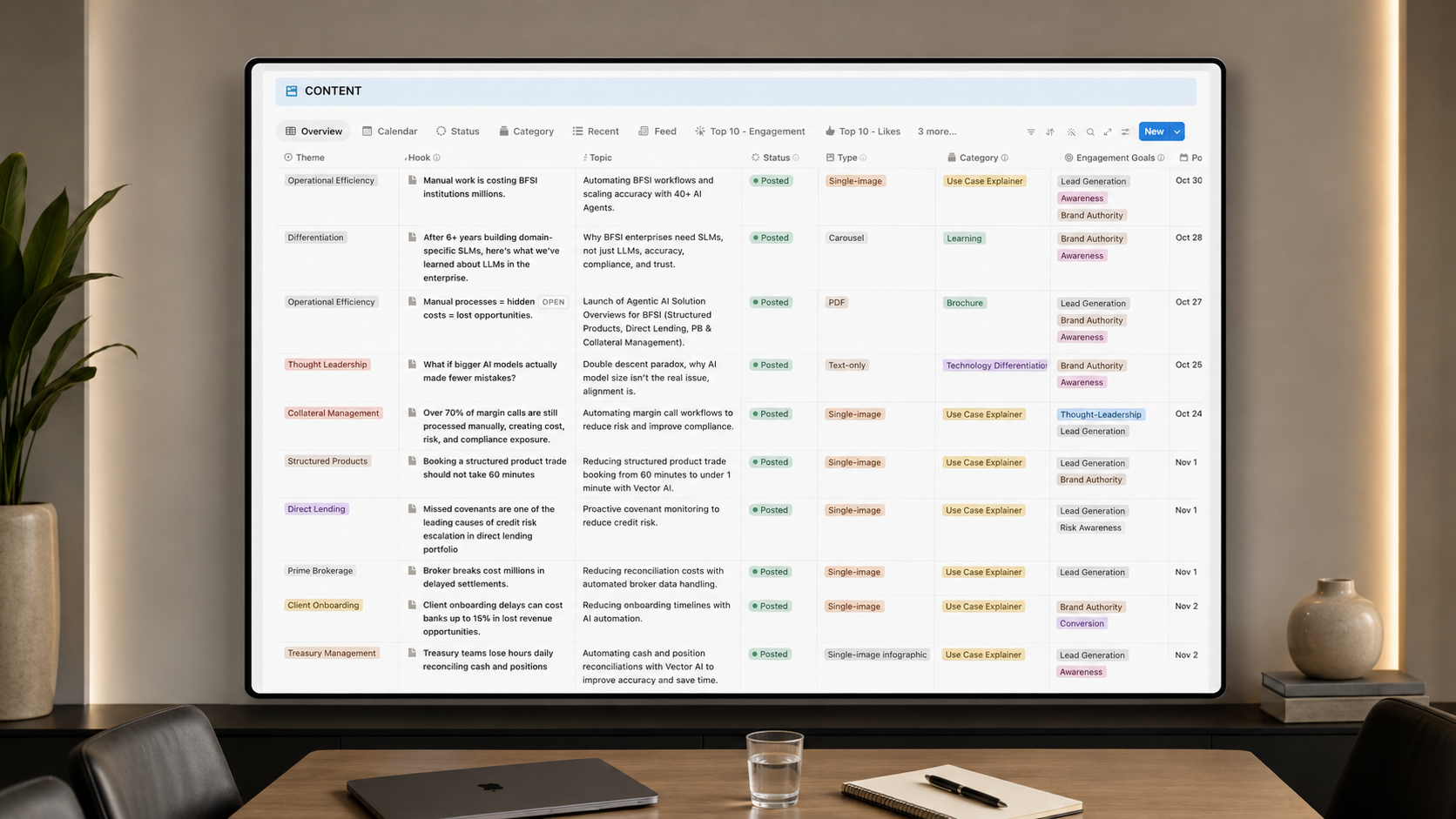
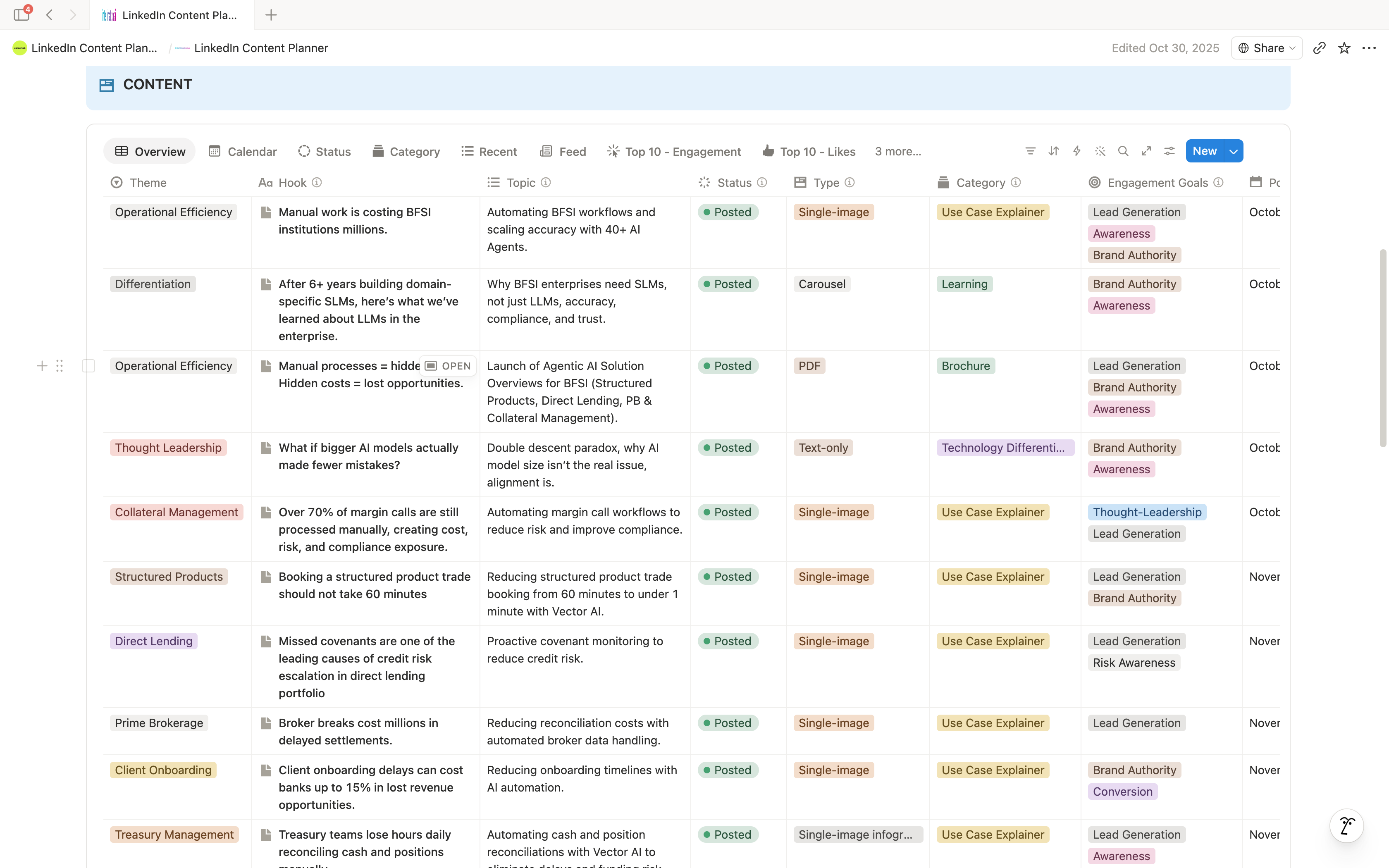
I built a LinkedIn content planner in Notion that ran the whole pipeline. Every post was logged against a theme tied to a product line (Collateral Management, Structured Products, Direct Lending, Prime Brokerage, Client Onboarding, Treasury Management), a written hook, the specific topic it argued, a format, a content category such as use case explainer or learning piece, and an approval status.
The part that mattered most commercially: every post also carried an engagement goal. Lead generation, brand authority, awareness, thought leadership or conversion. That single field is what stopped the calendar being a publishing schedule and made it a plan, because it forced the question of what each piece was actually for before it was written.
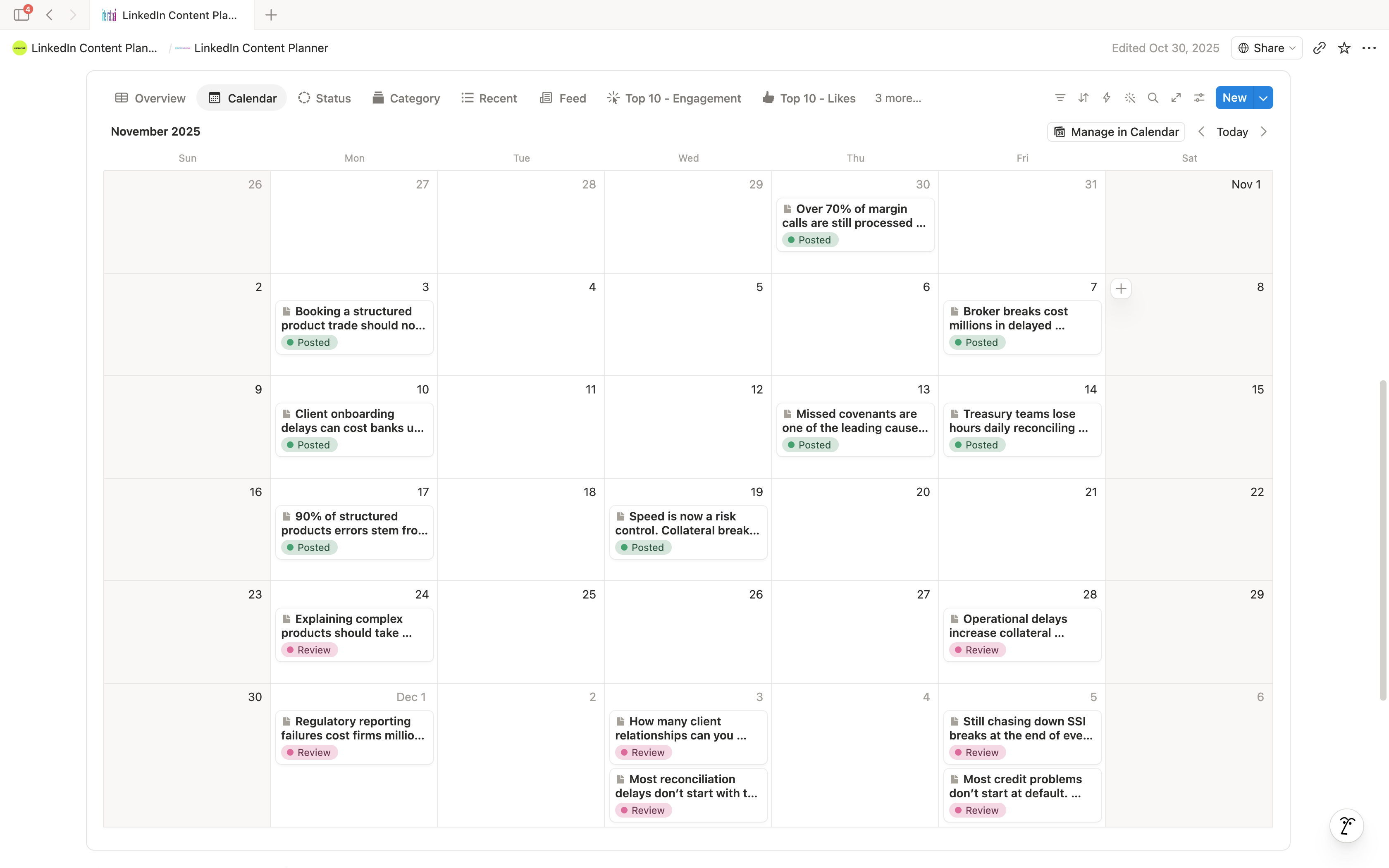
The workspace ran multiple views over the same database: a calendar for scheduling, status and category views for the team, and top-performing views by engagement and by likes so results fed back into what to write next. Drafts moved through a review state before publishing, which matters in a business where a claim about accuracy or compliance has to be technically correct before it is public.
Written, designed and published on the company page. Every post below is live on LinkedIn.
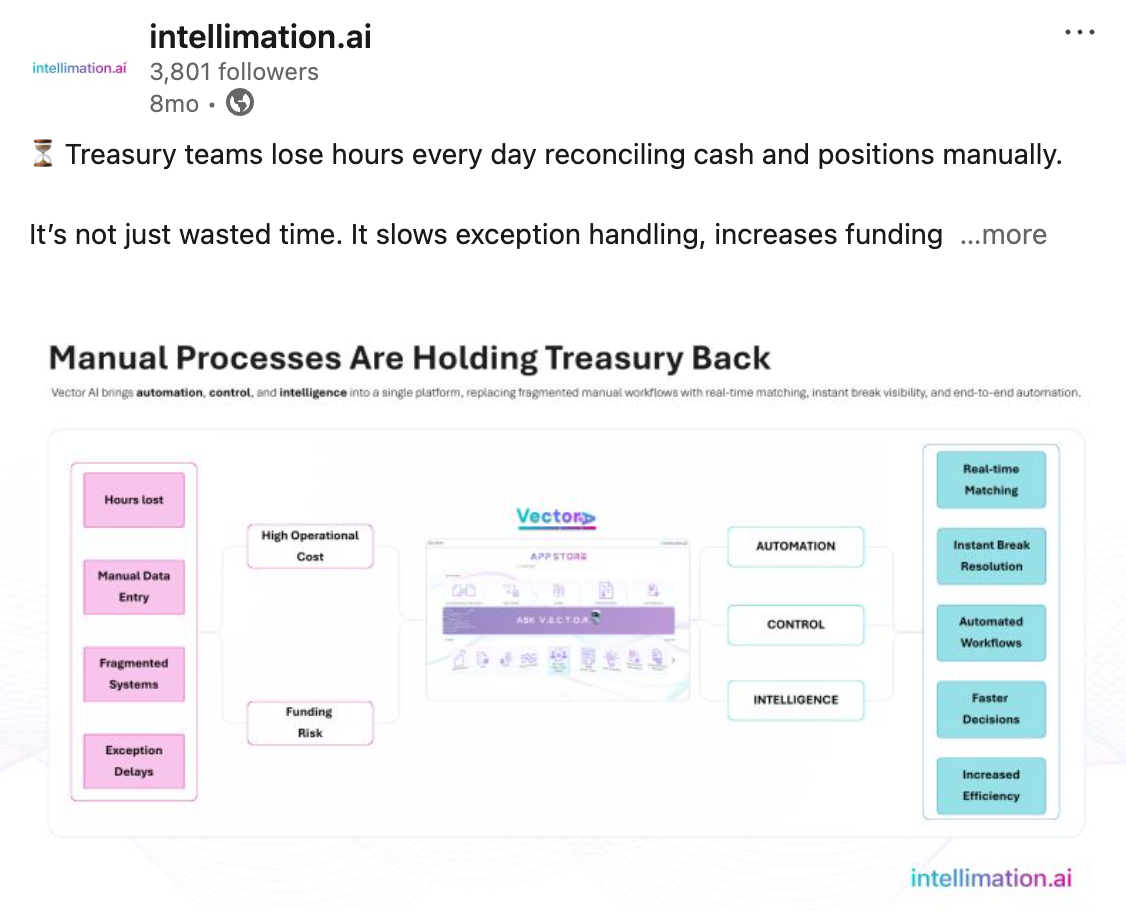
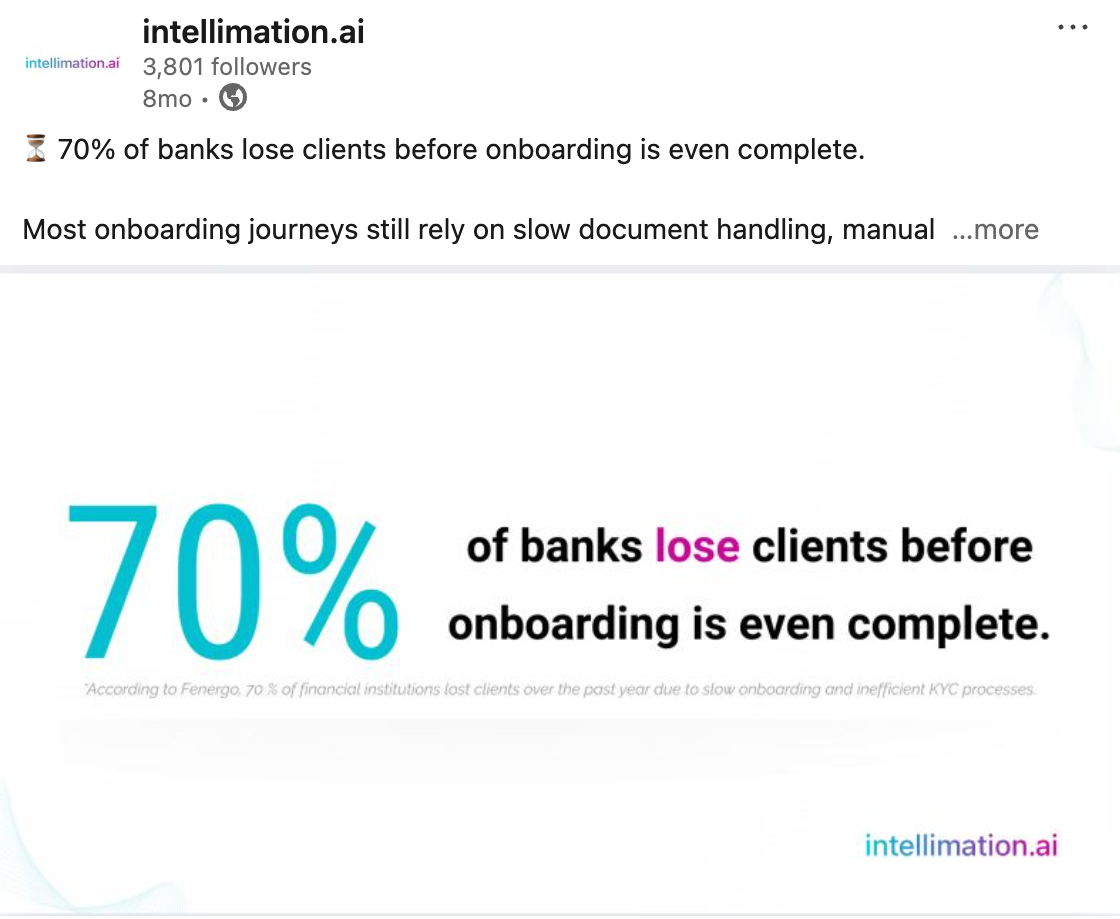
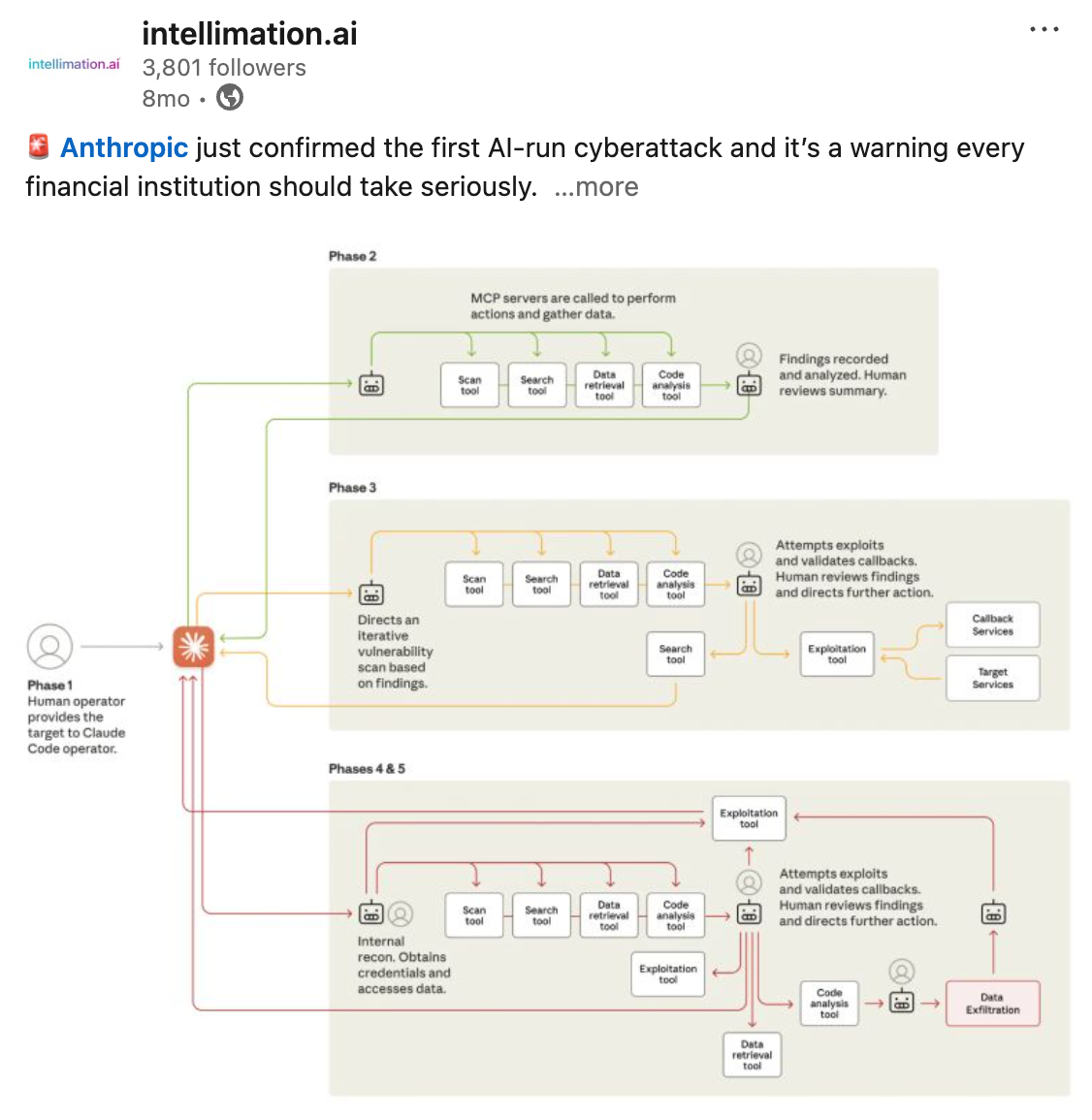
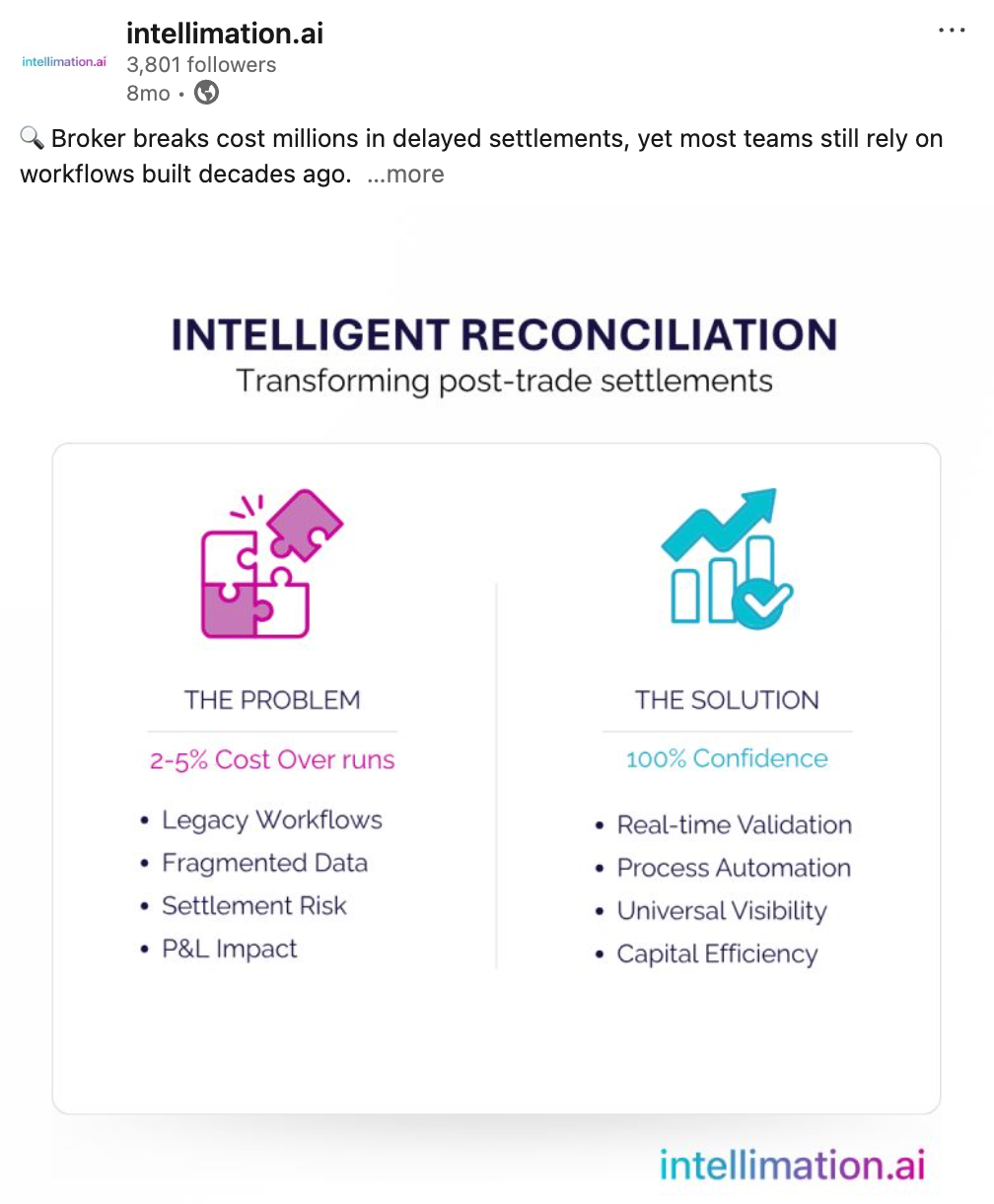
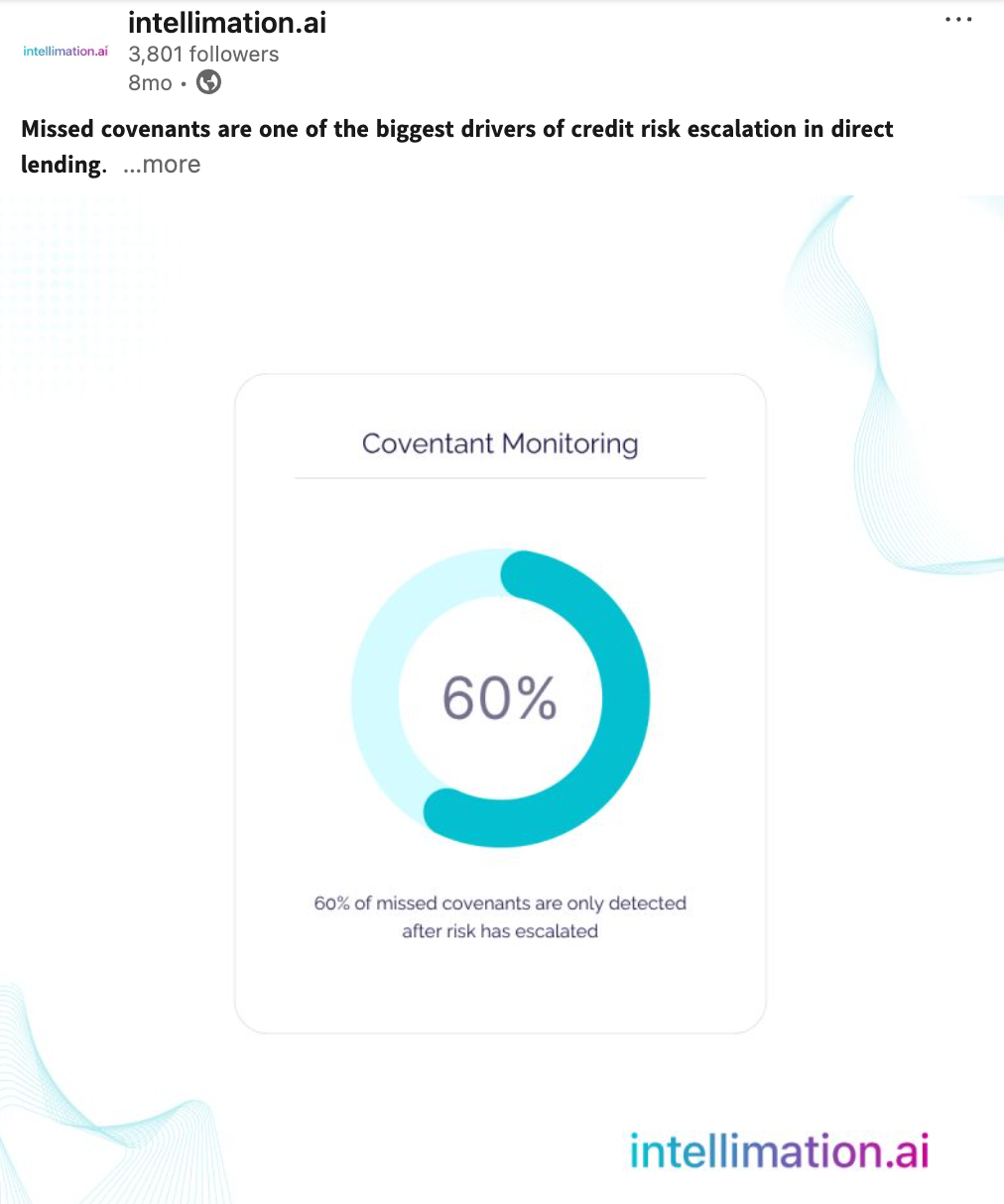


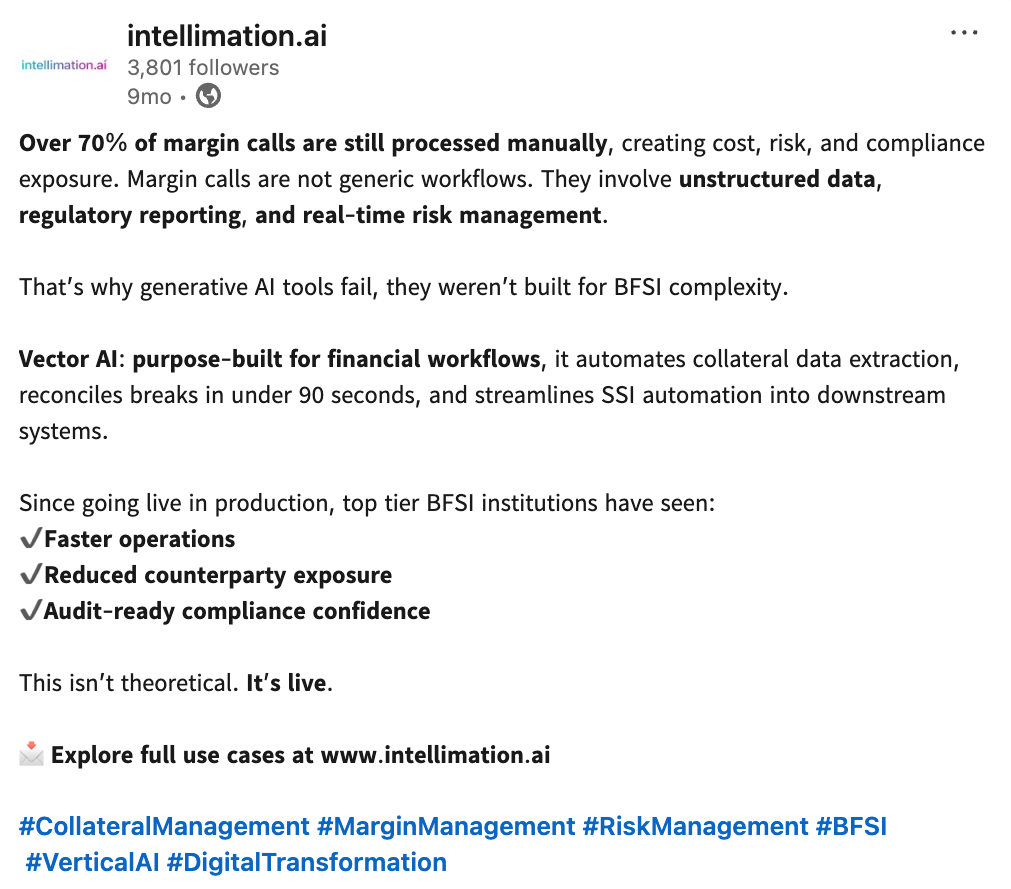
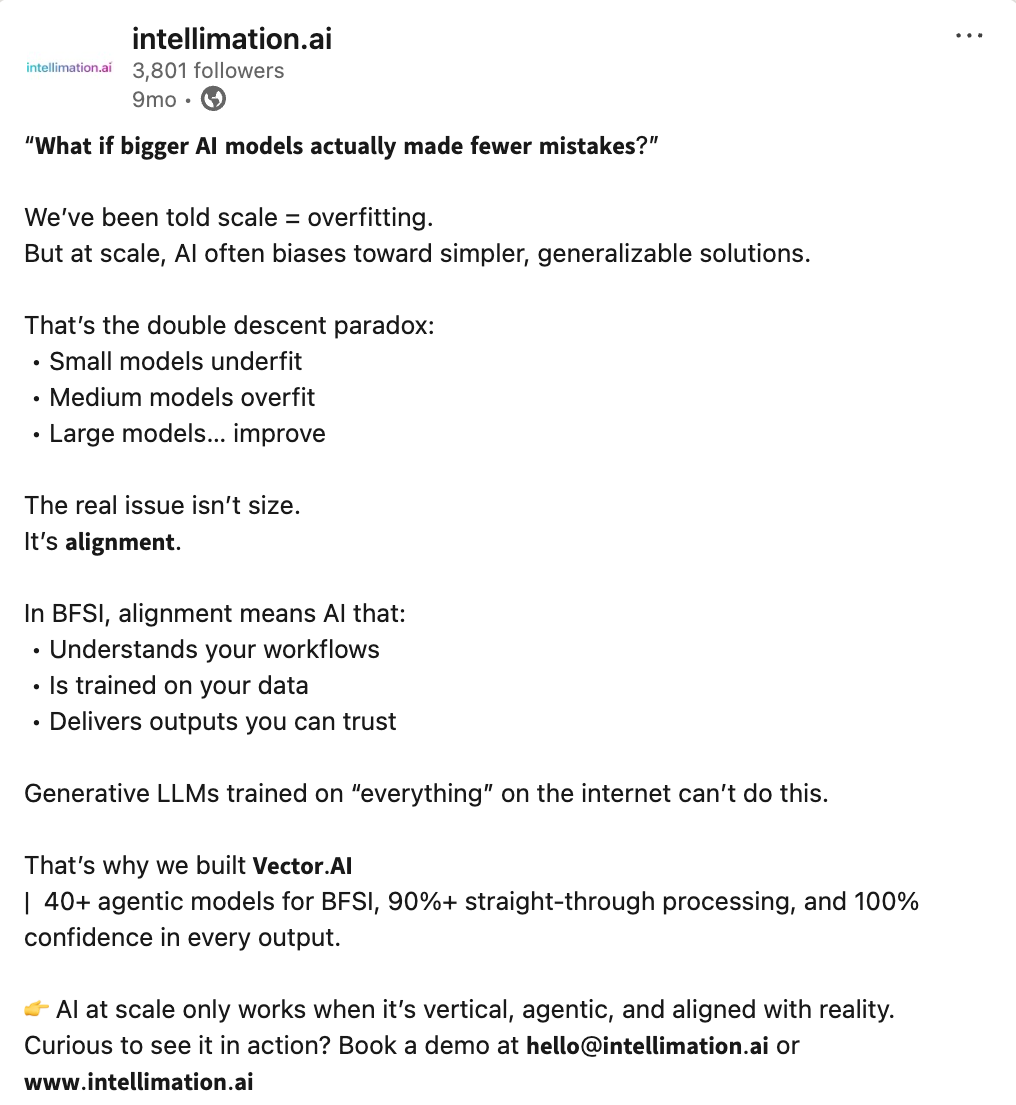
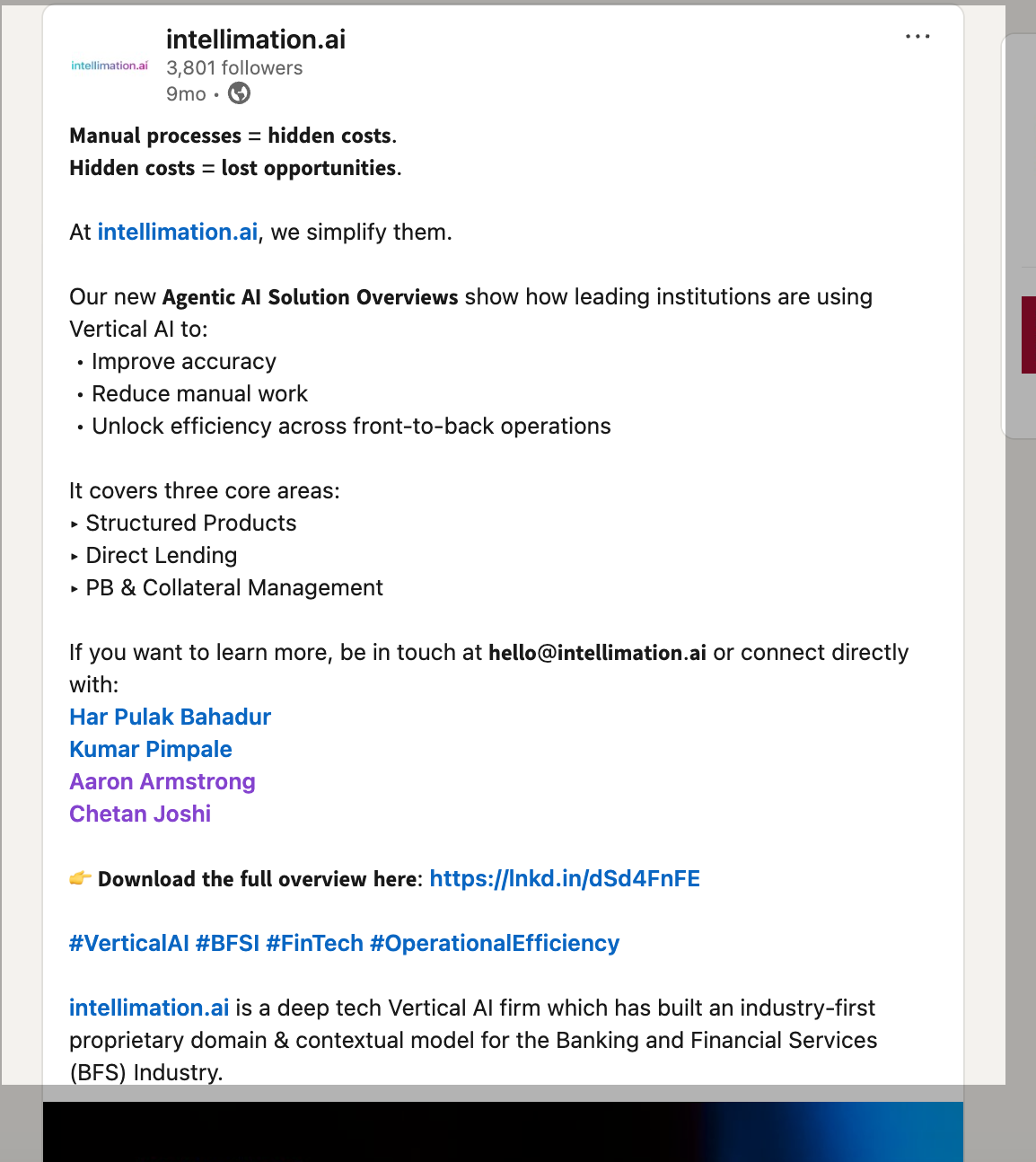


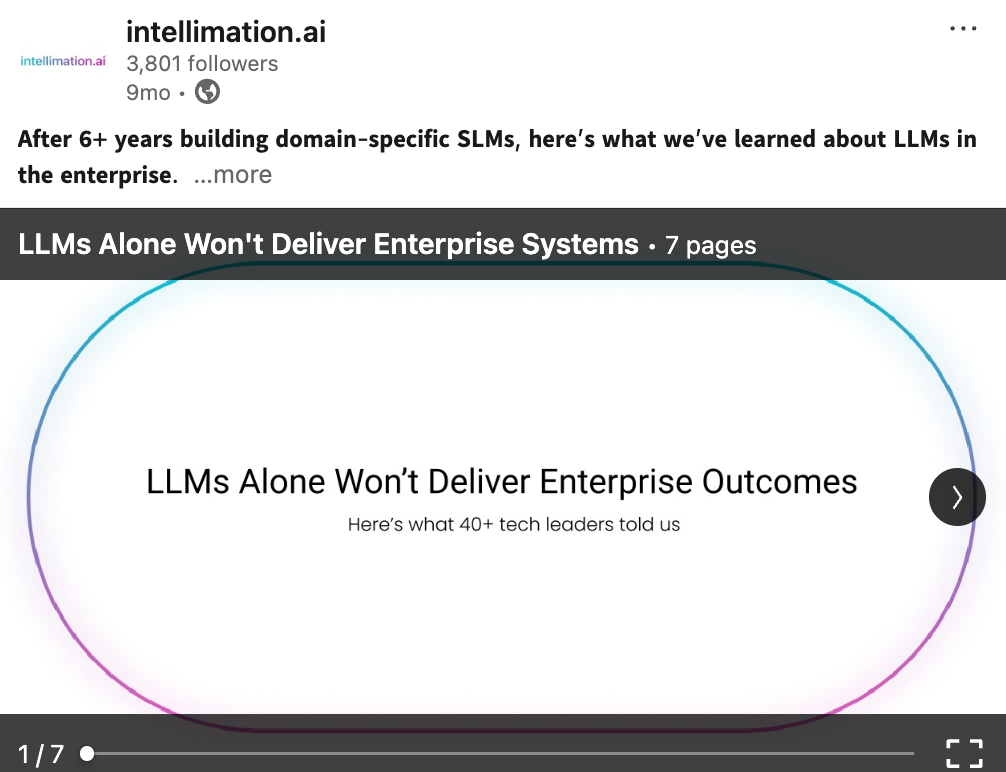
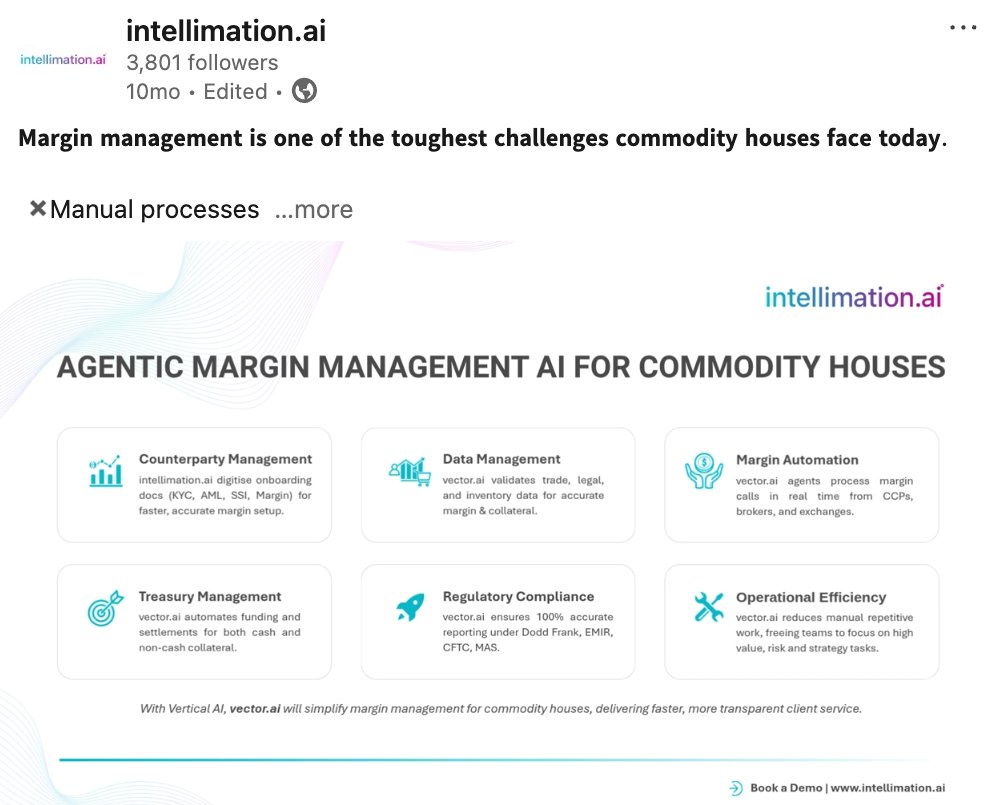







Formats ranged from single graphics and carousels to event promotion and long-form commentary. The recurring structure was simple: open with the operational pain a specific team actually feels, show what changes, and keep the technology in a supporting role rather than the headline.
Company page analytics for the posts I authored, March to October 2025.
The number worth pausing on is the click-through rate. Impressions measure how many people scrolled past. Clicks measure how many stopped and wanted more, and at 11.2% this content was doing that at several times the typical organic rate. In a category where most content is either too technical to follow or too vague to trust, that gap is the whole argument for writing it properly.
These figures cover the posts attributed to me in the company page export and deliberately exclude colleagues' posts and paid promotion, so they reflect my own output rather than the page's total performance.
Beyond social: the pieces that carried more weight and a longer shelf life.
Alongside the social programme I produced a white paper on vertical AI in BFSI, a newsletter on collateral management, website product copy and executive communications. Longer formats let the argument breathe: where a post can only assert that vertical AI differs from general-purpose models, a white paper can actually demonstrate it.
What worked, and what I would change.
What I am proudest of is that the content earned clicks rather than just impressions. It would have been easier to post frequently about AI in general and watch the reach numbers rise. Writing narrowly, for treasury teams, collateral managers and operations leads, meant smaller audiences and far higher intent.
If I ran the programme again, I would connect the planner's engagement goals to actual outcomes rather than to engagement alone. Tagging a post as lead generation set the intent, but the planner measured reactions and clicks, not whether that post produced a conversation. Closing that loop would have turned a well-run content operation into a provable commercial channel.